
Supplementary Applications and Interviews in Canada: What Universities Are Really Assessing
Supplementary applications and video interviews play a decisive role in Canadian undergraduate admissions. This article explains what universities assess beyond grades, why strong applicants underperform, and how structured preparation can improve interview and written response outcomes.

Introduction
For many undergraduate applicants, supplementary applications and video interviews are the least understood components of the Canadian admissions process. They are often treated as secondary requirements, tasks to complete after grades are submitted, rather than as central evaluation mechanisms.
In reality, supplementary materials play a decisive role in how Canadian universities differentiate applicants with similar academic profiles, such as University of Toronto (U of T), University of British Columbia (UBC), McMaster University and Queen's University. As undergraduate cohorts grow larger and more academically competitive, universities increasingly rely on written responses, video submissions, and interview style assessments to evaluate qualities that grades alone cannot capture.
This article explains what supplementary applications and video interviews are designed to assess, how universities interpret applicant responses, and why preparation quality often determines outcomes. Rather than offering templates or examples, it focuses on the evaluation logic behind these assessments, helping applicants understand how to prepare strategically.
Why Supplementary Evaluation Exists in Canadian Admissions
Canadian universities do not use supplementary applications to confirm academic ability. By the time applicants reach this stage, baseline academic readiness is usually assumed. Instead, supplementary assessments exist to answer a different question: how an applicant thinks, communicates, and aligns with the program’s learning environment.
As application volumes increase, admissions committees face the challenge of distinguishing between candidates who are academically qualified but differ in readiness for the demands of a specific program. Supplementary components provide structured insight into these differences.
These assessments are not designed to be trick questions. They are designed to surface patterns of reasoning, clarity of communication, and depth of reflection that are difficult to infer from transcripts alone.
What Universities Evaluate Beyond Grades
Across programs and institutions, supplementary applications and video interviews tend to assess a common set of underlying competencies, even when prompts vary.
One key area is communication under constraint. Applicants are often asked to respond within time limits or word limits, reflecting the reality of academic and professional environments where ideas must be expressed clearly and efficiently. Evaluators pay close attention to structure, coherence, and relevance.
Another area is judgment and reasoning. Scenario based questions are used to assess how applicants analyze situations, weigh considerations, and justify decisions. There is rarely a single correct answer. Instead, evaluators look for logical consistency and thoughtful prioritization.
A third area is self awareness and reflection. Applicants are often asked to discuss experiences, challenges, or motivations. Strong responses demonstrate insight into learning processes and personal development, rather than listing achievements without analysis.
Finally, admission teams consider program fit. This does not mean rehearsed enthusiasm. It means evidence that the applicant understands what the program demands and has reflected on why it aligns with their interests and abilities.
Written Supplementary Applications More Than Personal Statements
Written supplementary responses are often misunderstood as informal essays. In practice, they function more like structured evaluations of thinking and communication.
Admissions committees assess how applicants interpret prompts, organize responses, and select relevant examples. Clarity matters more than sophistication. Responses that are concise, well structured, and directly address the question are generally more effective than longer, unfocused narratives.
Applicants frequently weaken their responses by trying to impress rather than explain. Overly abstract language, excessive storytelling, or generic claims about passion obscure the evaluative signal. Strong responses demonstrate intentional choice: why this example, why this reasoning, and why this conclusion.
Interviews and Video Responses Evaluating Readiness in Real Time
Interview style assessments introduce an additional layer of complexity. Applicants must process questions, organize thoughts, and communicate effectively under time pressure, often without the opportunity to revise.
Canadian universities use video interviews and written essays to approximate real academic and professional interactions. Evaluators are not looking for polished speakers, but for applicants who can think aloud, remain composed, and respond directly to prompts.
Common weaknesses include rambling, failing to answer the question directly, or relying on memorized narratives that do not fit the prompt. Strong candidates demonstrate adaptability. They listen carefully, structure responses logically, and adjust examples to the question at hand.
Why Many Strong Applicants Underperform in Supplementary Assessments
A significant number of academically strong applicants underperform in supplementary components, not because they lack ability, but because they misunderstand the purpose of these assessments.
Some treat supplementary responses as formalities and allocate minimal preparation time. Others assume that authenticity alone is sufficient, without practicing structured communication. Still others rely on memorized answers that break down under unexpected prompts.
Canadian universities do not penalize nervousness or imperfection. They do, however, notice lack of structure, unclear reasoning, and weak alignment with program expectations. Preparation is therefore not about scripting answers, but about developing repeatable response frameworks that can be adapted in real time.
Supplementary Assessments Across Different Program Types
While the underlying competencies assessed are similar, the emphasis varies by program.
Business and commerce programs often prioritize communication, leadership reasoning, and ethical judgment. Engineering and technical programs may focus more on problem solving approach and decision logic. Health and life sciences frequently assess reflection, resilience, and understanding of professional responsibility.
Applicants who fail to adapt their approach across programs risk misalignment. The same experience can be presented effectively in multiple contexts, but the framing must reflect what the program values.
Integrating Supplementary Preparation Into the Application Process
Effective applicants do not treat supplementary assessments as isolated tasks. Instead, they integrate preparation across written and spoken formats, ensuring consistency in narrative, reasoning, and motivation.
This integration allows applicants to respond flexibly to prompts while maintaining coherence. It also reduces cognitive load during timed assessments, as applicants rely on practiced structures rather than improvisation under pressure.
Preparation quality here is cumulative. Early practice improves not only performance, but confidence, which evaluators consistently interpret as readiness.
How Myls Interview Can Support Supplementary and Interview Preparation
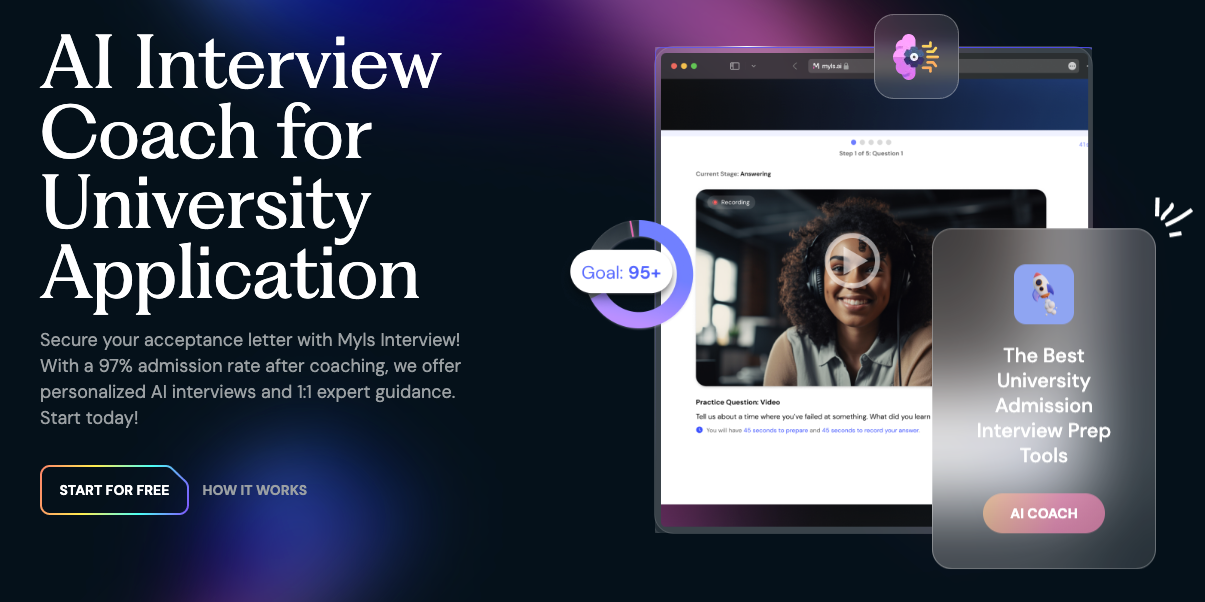
Most Canadian universities require supplementary applications, which include video interviews and written response essays. Both are difficult to prepare for independently because applicants rarely receive detailed feedback. Without external evaluation, it is hard to know whether responses are clear, well structured, or aligned with admissions expectations.
Myls Interview supports undergraduate applicants by enabling realistic practice under authentic interview conditions, while providing objective and structured feedback. This allows applicants to move beyond guesswork and focus on measurable improvement.
Myls Interview helps applicants prepare by offering:
- Interview style and past question practice reflecting real Canadian admissions formats
- Timed response interview simulations that mirror actual evaluation conditions
- Full response recording to review delivery, structure, and clarity
- Instant and actionable feedback on reasoning, communication, and reflection
- Program relevance evaluation measuring alignment with admissions expectations
- Progress tracking across multiple practice sessions
This approach is particularly valuable for applicants facing holistic or interview based evaluations, where success depends on repeatable communication skills, not memorized content.
Conclusion
Supplementary applications and video interviews are not peripheral to Canadian undergraduate admissions. They are central tools used to evaluate readiness, judgment, and program fit among academically qualified candidates.
Applicants who understand what these assessments are designed to measure and who prepare accordingly position themselves more effectively within a competitive admissions process. Strong performance in supplementary components often distinguishes successful applicants from those with similar academic profiles.
If you want to strengthen how you perform in supplementary applications and interviews, sign up for Myls Interview to practice realistic undergraduate questions with targeted feedback before your application is evaluated.


