
Queen’s University Health Sciences Supplementary Application and Interview Guide
A comprehensive guide to the Queen’s University Health Sciences supplementary application, explaining interview format, evaluation criteria, question themes, common pitfalls, and effective preparation strategies.

Queen’s University Health Sciences is widely recognized as one of the most selective undergraduate health science programs in Canada. Each admissions cycle attracts a large pool of academically strong applicants, yet only a limited number ultimately receive offers. This is because academic achievement alone does not determine admission. The Queen's Health Science supplementary application (Supp App) and video interview are central to the final selection process.
Through the supplementary interview, Queen’s Health Sciences evaluates applicants on ethical reasoning, clarity of communication, empathy, critical thinking, and alignment with the program’s learning philosophy. Many high achieving students struggle in this stage not due to lack of capability, but because they are unfamiliar with how the interview assesses reasoning and judgment under time pressure.
This guide offers a detailed overview of the Queen’s Health Sciences supplementary application (Supp App), covering interview structure, evaluation standards, common question themes, assessment approach, and effective preparation strategies.
Queen’s Health Sciences Supplementary Application Format
The Queen’s Health Sciences supplementary application generally includes timed interview responses, which may involve video based answers and short written submissions. While the exact format may change slightly, the core structure remains largely consistent.
Applicants are typically provided with limited time to prepare and respond, are allowed a single attempt per question, and cannot revise answers once submitted. Responses are assessed based on quality of reasoning, clarity of expression, ethical awareness, and reflective thinking, rather than memorized knowledge or scientific detail.
This format is designed to discourage rote preparation. Instead, it favours applicants who can analyze unfamiliar scenarios, communicate effectively, and demonstrate sound judgment under constrained conditions. Preparation methods that closely resemble real interview conditions and include targeted feedback tend to produce far stronger results.
What Queen’s Health Sciences Looks for in Applicants
A clear understanding of how applicants are evaluated is essential for strong interview performance. Queen’s Health Sciences consistently focuses on a defined set of competencies, regardless of how individual questions are phrased.
Ethical Reasoning and Judgment
Ethical judgment is a core focus of the Health Sciences interview. Interviewers assess how applicants recognize ethical considerations, weigh different perspectives, and justify decisions responsibly.
Strong candidates demonstrate:
- Awareness of how decisions affect others
- Balanced and thoughtful reasoning
- Professional conduct in ambiguous situations
These questions are not intended to test moral correctness, but rather to evaluate how Health Science applicants approach complex and uncertain scenarios.
Communication Clarity
Clear and effective communication is critical in Health Sciences, where collaborative discussion is central to the learning environment. Admissions reviewers examine how well applicants organize their thoughts, explain their reasoning, and communicate calmly within time limits.
Responses that rely on overly technical language or excessive detail often lose effectiveness. Strong performance is associated with clear structure, logical progression, and measured pacing.
Empathy and Interpersonal Awareness
Applicants are also assessed on their capacity to understand others, demonstrate empathy, and respond appropriately in interpersonal contexts.
High quality responses reflect:
- Consideration of others’ perspectives
- Respectful communication
- Emotional awareness without exaggeration
Reflection and Maturity
Reflective thinking is among the most heavily weighted evaluation criteria. Interviewers look for applicants who can learn from experience, recognize personal limitations, and adjust their thinking accordingly.
Candidates who merely recount events without explaining how their perspective changed or what they learned often score lower than those who show growth and self awareness.
Queen’s Health Sciences Interview Question Examples
Although interview questions differ from cycle to cycle, the underlying skills being assessed remain stable.
Motivation and Program Fit Questions
Interviewers evaluate whether applicants demonstrate genuine interest in health sciences, understand the program’s inquiry based learning model, and have made a thoughtful program choice.
Strong responses focus on curiosity about health related issues and their broader societal context, rather than narrowly defined career goals.
Practicing with authentic interview style questions helps applicants move beyond generic responses and demonstrate meaningful alignment with the program.
Ethical and Situational Judgment Questions
Assessment centers on logical reasoning, awareness of stakeholders, and professional judgment.
Effective responses:
- Clearly identify the ethical concern
- Consider multiple viewpoints
- Propose a balanced course of action
- Reflect on responsibility and impact
Critical Thinking Under Uncertainty
Applicants are often presented with scenarios where information is incomplete or ambiguous.
Interviewers assess:
- Logical reasoning processes
- Willingness to question assumptions
- Comfort navigating uncertainty
Arriving at a definitive solution is less important than demonstrating clear and thoughtful reasoning.
Communication Under Time Pressure
Queen’s Health Sciences places strong emphasis on responses that are organized, concise, and clearly communicated, even under strict time constraints. Structure and clarity outweigh the volume of content delivered.
How to Answer Queen’s Health Sciences Interview Questions Effectively
High performing responses follow a consistent and organized structure. Applicants briefly introduce context, explain their reasoning, describe their response, and reflect on their thinking.
The program values reasoned judgment and reflection more than correctness. Applicants who demonstrate thoughtfulness, adaptability, and empathy tend to perform more strongly.
Effective time management is essential. Strong candidates outline their structure early, pace their responses carefully, and conclude with clarity. Practicing under timed conditions with specific and actionable feedback is one of the most effective ways to improve.
Common Mistakes That Hurt Queen’s Health Sciences Applications
Many applicants underperform due to avoidable errors, including:
- Treating the interview as a test of factual knowledge
- Jumping to conclusions without explanation
- Insufficient reflection
- Overly rehearsed responses
- Poor pacing and time control
These issues are best addressed through deliberate practice using realistic interview scenarios and objective performance feedback.
How to Prepare for the Queen’s Health Sciences Interview
Successful preparation emphasizes skill development rather than memorization. High impact preparation involves timed practice, verbal reasoning, and focused feedback.
Simply reading sample answers is rarely effective. Health Sciences interviews reward ethical reasoning, adaptability, and clear communication, all of which must be trained through realistic interview simulation.
Preparation Timeline and Final Checklist
Four to six weeks Before:
- Applicants should focus on understanding evaluation standards and practicing key question types.
Two to three weeks Before:
- Preparation should shift toward full interview simulations and strengthening reflection quality.
Final week
- Applicants should complete technical preparation and light review, while avoiding last minute memorization.
Final Perspective on Preparing for Queen’s Health Sciences
Queen’s Health Sciences interviews are designed to identify applicants who can reason ethically, communicate clearly, and reflect thoughtfully within a collaborative academic setting.
Applicants who prepare strategically using authentic interview questions, targeted feedback, detailed performance reports, and program relevance evaluation through Myls Interview gain a clear competitive advantage in one of Canada’s most selective health sciences admissions processes.
How Myls Interview Helps Improve Queen’s Health Sciences Interview Outcomes
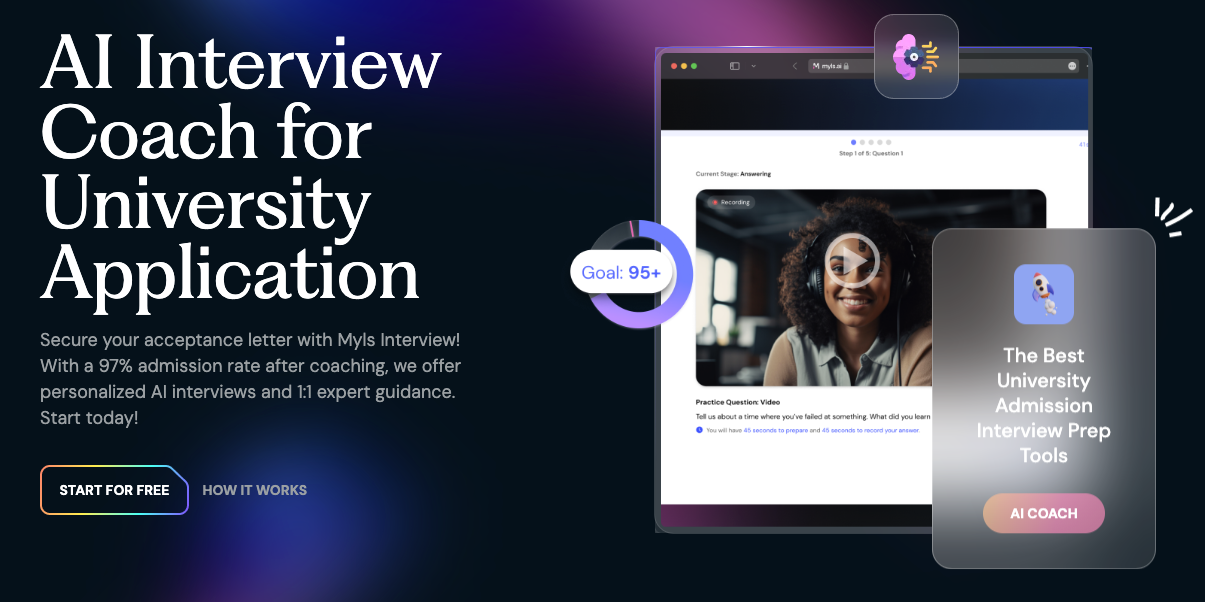
To succeed in the Queen’s Health Sciences supplementary interview, applicants must demonstrate ethical judgment, structured reasoning, empathy, and alignment with program values under pressure.
Myls Interview is built to closely replicate university admissions interviews and support systematic improvement through the following features:
- Admissions style video interview simulations, reflecting the timing, structure, and pressure of real Health Sciences interviews
- Practice with past interview style questions, based on historical patterns and expectations specific to Queen’s Health Sciences
- Customizable interview questions, allowing applicants to tailor practice sessions to specific programs, competencies, or personal weaknesses
- Full response recording, allowing applicants to review reasoning, delivery, clarity, and non verbal communication
- Detailed performance reports, with clear scoring across ethical reasoning, communication, reflection, and program relevance
- Program relevance assessment, evaluating how closely each response aligns with what Queen’s Health Sciences values in successful applicants
- Actionable feedback for every attempt, identifying precise areas for improvement
- Progress tracking across multiple sessions, enabling applicants to measure improvement and build confidence over time
- Customize questions for optimizing the interview profess
By combining realistic mock interview practice, structured feedback, multi dimensional evaluation, and program relevance analysis, Myls Interview helps applicants steadily improve interview performance and significantly increase their likelihood of receiving an offer.


