
McMaster University Integrated Business and Humanities IBEHS Supplementary Application and Interview Guide
A clear guide to the McMaster IBEHS supplementary application and interview, explaining how interdisciplinary thinking, ethical reasoning, communication, and reflection are assessed—and how to prepare effectively.

McMaster University Integrated Business and Humanities (IBEHS) program is a highly selective interdisciplinary pathway that combines analytical thinking with ethical inquiry and leadership development. While many applicants meet academic requirements, admission outcomes depend heavily on the McMaster Intergrated Business and Humanities (IBEHS) supplementary application (supp app) and interview, which are designed to identify students who can integrate perspectives across disciplines and communicate with clarity.
The IBEHS assessment evaluates how applicants reason through complex issues, articulate ideas, collaborate with others, and reflect on values and impact. Strong academic performance alone is rarely sufficient. Applicants who succeed are those who can demonstrate structured thinking, ethical awareness, and intellectual maturity under time constraints.
This guide provides a clear overview of the McMaster IBEHS supplementary application, including format, evaluation priorities, realistic interview question examples, assessment approach, and preparation strategies.
McMaster IBEHS Supplementary Application Format
The McMaster IBEHS supplementary application typically includes timed interview components, which may involve video responses and short written prompts. While the delivery platform may change, the underlying structure remains consistent.
Applicants are provided with limited preparation and response time, are usually allowed one attempt per question, and cannot revise responses after submission. Evaluation emphasizes reasoning quality, communication structure, ethical judgment, reflection, and program alignment, rather than specialized business or humanities knowledge.
This format rewards applicants who can interpret prompts efficiently, organize their thinking, and express ideas clearly under pressure. Preparation methods that replicate real interview conditions and include targeted feedback tend to lead to stronger performance.
What McMaster IBEHS Looks for in Applicants
Strong interview outcomes depend on understanding how IBEHS evaluates candidates. Across questions, admissions reviewers consistently assess several core competencies.
Interdisciplinary Thinking
IBEHS places strong emphasis on the ability to integrate ideas from business, humanities, and social contexts. Interviewers assess how applicants connect concepts, balance perspectives, and reason beyond a single discipline.
Strong responses demonstrate:
- Awareness of multiple viewpoints
- Ability to synthesize ideas
- Clear explanation of reasoning
Ethical Reasoning and Values Awareness
Ethical awareness is central to the IBEHS program. Applicants are evaluated on how they recognize ethical considerations, weigh consequences, and justify decisions responsibly.
These questions assess judgment and reasoning, not moral certainty.
Communication Clarity
Clear communication is essential in IBEHS’s discussion driven and inquiry focused learning environment. Admissions reviewers assess how well applicants structure ideas, explain reasoning, and manage time.
Overly abstract or unfocused responses often weaken evaluation. Strong answers are organized, precise, and easy to follow.
Collaboration and Perspective Taking
Applicants are evaluated on their ability to work with others, respect differing viewpoints, and contribute thoughtfully to group discussion.
High quality responses demonstrate openness, accountability, and reflective communication.
Reflection and Intellectual Maturity
Reflection is a major differentiator in IBEHS admissions. Interviewers look for applicants who can evaluate their own assumptions, learn from experience, and articulate growth.
Responses that focus only on outcomes without reflection often score lower.
McMaster IBEHS Interview Question Examples
Although interview questions change over time, the competencies being assessed remain consistent. The following examples reflect common question styles used in IBEHS interviews.
Motivation and Program Fit Questions
Example prompts may include:
- Why are you interested in an interdisciplinary program like IBEHS
- What experiences influenced your interest in combining business and humanities
- How do you see interdisciplinary thinking shaping your future studies
Strong responses demonstrate intentional program choice and awareness of IBEHS’s integrated academic model.
Ethical and Values Based Questions
Example prompts may include:
- Describe a situation where values influenced a difficult decision
- How would you respond to an ethical disagreement within a group
- Tell us about a time you had to balance competing priorities fairly
Evaluation focuses on reasoning process and perspective awareness, not definitive answers.
Critical Thinking and Interpretation Questions
Applicants may be asked to respond to open ended prompts requiring analysis and interpretation.
Example prompts may include:
- How would you approach a complex issue with no clear solution
- Describe a time you reconsidered your viewpoint after learning new information
Interviewers assess depth of reasoning and adaptability.
Collaboration and Dialogue Questions
Example prompts may include:
- Describe a discussion where differing opinions challenged your thinking
- How do you handle disagreement in academic or group settings
Strong responses emphasize listening, respectful engagement, and reflection.
Communication Under Time Pressure
Some prompts assess clarity under strict timing.
Example prompts may include:
- Explain an idea clearly within a short time
- Summarize a complex experience concisely while highlighting your reasoning
In these cases, structure and clarity are more important than detail.
How to Answer McMaster IBEHS Interview Questions Effectively
High performing responses follow a clear and intentional structure. Applicants briefly establish context, explain their reasoning, describe actions taken or viewpoints held, and reflect on outcomes.
IBEHS places greater emphasis on reflection and judgment than on achievement alone. Applicants who demonstrate adaptability, ethical awareness, and thoughtful analysis tend to perform more strongly.
Effective time management is essential. Strong candidates signal structure early, pace responses carefully, and conclude clearly. Practicing under timed conditions with actionable feedback is one of the most effective ways to improve.
Common Mistakes That Hurt McMaster IBEHS Applications
Applicants often underperform due to avoidable issues, including:
- Treating questions as academic theory tests
- Offering opinions without explanation
- Weak reflection
- Over rehearsed responses
- Poor pacing and time control
Avoiding these mistakes requires deliberate practice using realistic interview prompts and clear performance feedback.
How to Prepare for the McMaster IBEHS Interview
Effective preparation focuses on skill development rather than memorization. High impact preparation includes timed practice, structured explanation, and targeted feedback.
Reading example responses without practicing aloud rarely leads to improvement. IBEHS interviews reward reasoned thinking, ethical awareness, and communication clarity, which must be trained through realistic interview simulation.
Preparation Timeline and Final Checklist
Four to six weeks before
Review evaluation criteria and practice core question themes.
Two to three weeks before
Shift toward full interview simulations and strengthening reflection quality.
Final week
Complete technical preparation and light review, while avoiding last minute memorization.
Final Perspective on Preparing for McMaster IBEHS
McMaster IBEHS interviews are designed to identify applicants who can integrate ideas, reason ethically, communicate clearly, and reflect thoughtfully in an interdisciplinary academic environment.
Applicants who prepare strategically using past questions, actionable feedback, detailed performance reports, and program relevance evaluation through Myls Interview gain a meaningful advantage in a competitive admissions process.
How Myls Interview Helps Improve McMaster IBEHS Interview Outcomes
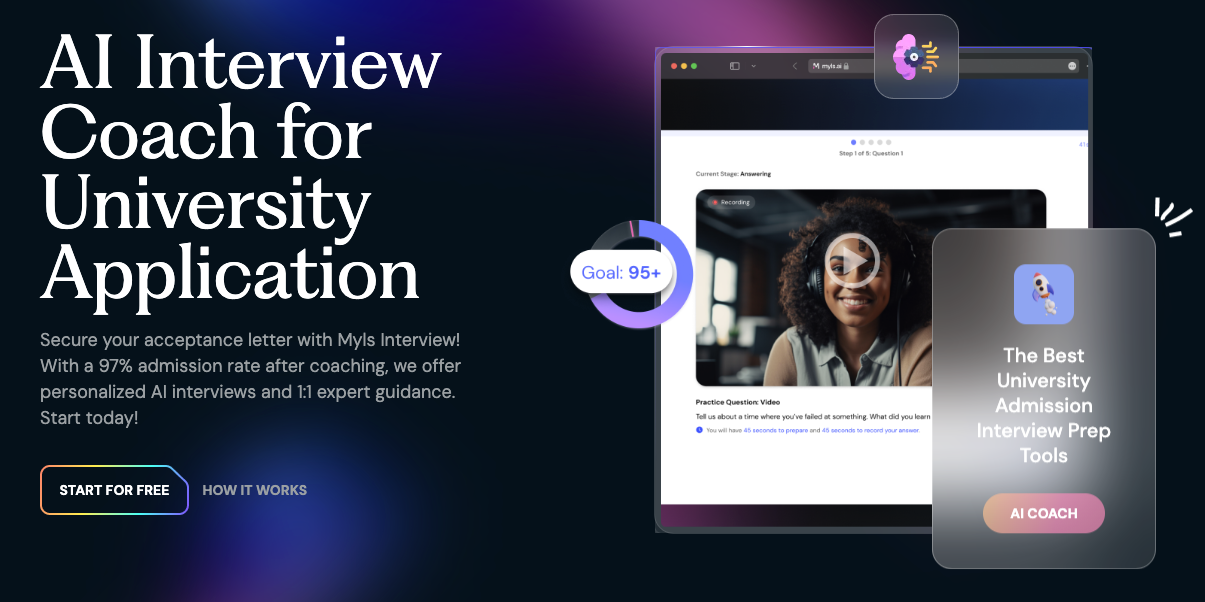
Strong performance in the McMaster IBEHS supplementary interview requires applicants to demonstrate interdisciplinary reasoning, ethical judgment, communication clarity, and program alignment under pressure.
Myls Interview supports this preparation through:
- University admissions video interview simulation reflecting real IBEHS style interviews
- Practice with past interview questions based on historical IBEHS patterns
- Customizable interview questions targeting specific competencies and weaknesses
- Full response recording for reviewing delivery, structure, and clarity
- Comprehensive performance reports with scoring across reasoning, communication, reflection, and program relevance
- Program relevance evaluation measuring alignment with IBEHS expectations
- Actionable feedback on every attempt
- Progress tracking across multiple practices
By combining realistic practice, structured feedback, and program specific evaluation, Myls Interview helps applicants systematically improve interview performance and increase their chance of receiving an offer.


