
How to Turn a Weakness Into a Strength in University Interviews
Learn how to answer the weakness question in university interviews with clear structure, real examples, and expert guidance from Myls Interview.

Talking about your weaknesses is one of the most uncomfortable parts of any university admissions interview. When you are applying to competitive programs such as U of T Rotman Commerce, Ivey AEO, Queen’s Smith Commerce, McMaster Health Sciences, or Waterloo Engineering, the stakes can feel especially high.
However, the classic interview question “What is your greatest weakness?” is not designed to trap you or expose flaws. In Canadian university admissions, this question is used to assess self awareness, reflection, and growth potential. When answered correctly, it becomes one of the strongest opportunities to differentiate yourself.
At Myls Interview, we help students turn this question from a source of anxiety into a strategic advantage by training them to communicate honestly, clearly, and confidently under interview conditions.
Why Admissions Committees Ask About Weaknesses
Canadian admissions officers are not looking for perfect students. By the time you reach the interview stage, your academic readiness has already been established. The weakness question exists to evaluate how you think about improvement, not whether you make mistakes.
Admissions committees want to know:
- Can you reflect honestly on your challenges
- Do you take responsibility for your development
- Have you taken concrete steps to improve
- Are you capable of learning from feedback
Answers such as “I am a perfectionist” or “I work too hard” consistently score poorly because they avoid genuine reflection. Strong applicants show maturity, self insight, and intentional growth.
What This Question Is Really Testing
In Canadian university interviews, weakness questions reveal far more than a single flaw. They show how applicants handle discomfort, uncertainty, and accountability.
Interviewers are evaluating whether you:
- Recognize areas for improvement
- Understand the impact of your weakness
- Take proactive steps to address it
- Can articulate growth clearly under time pressure
This is especially important in video interviews and Kira Talent interviews, where responses are timed and cannot be revised. Clarity and structure matter as much as content.
Common Mistakes Students Make When Answering This Question
One of the most common mistakes is avoiding the question altogether. Some students choose a fake weakness that is actually a strength, while others minimize the issue so much that it sounds insincere.
Another frequent error is being too negative. Dwelling excessively on a weakness without demonstrating improvement can undermine confidence.
Some applicants also fail by being too vague, using general statements without evidence. Admissions committees want to hear specific actions and outcomes, not abstract claims.
These mistakes are rarely caused by lack of effort. They are more often the result of misaligned preparation and lack of structured practice.
How to Structure a Strong Weakness Answer
Effective interview answers follow a clear and logical progression that shows growth rather than defensiveness.
A simple and reliable structure is:
- Past Identify a genuine weakness
- Challenge Explain how it affected you
- Growth Describe specific steps taken to improve and what changed
For example, instead of saying you struggled with public speaking, explain how that affected group presentations, what you did to address it, and how your confidence improved over time.
This approach demonstrates self awareness, initiative, and learning capacity, which Canadian admissions committees value highly.
Choosing the Right Type of Weakness to Discuss
Not all weaknesses are appropriate. A good weakness is honest but manageable and does not contradict the core requirements of the program.
Safe categories include:
- Difficulty delegating in group work
- Hesitation speaking up in discussions
- Time management challenges
- Overly self critical habits
- Initial discomfort with leadership roles
Avoid weaknesses that directly undermine program readiness, such as poor ethics or lack of commitment.
How to Show Growth Instead of Just Claiming It
Admissions committees are persuaded by evidence, not intention. Saying you improved is not enough. You must show how improvement occurred and what changed as a result.
Strong interview answers reference:
- A project that improved due to your changes
- Feedback that altered your approach
- A skill you actively developed
- A mindset shift that now guides your behaviour
This transforms your weakness into proof of adaptability and resilience.
Why Practice Matters More Than Writing the Perfect Answer
Even well structured answers can fail if delivery is unclear. In timed video interviews, applicants often rush, over explain, or lose focus.
Practicing under realistic interview conditions is critical. This includes:
- Speaking within strict time limits
- Organizing thoughts quickly
- Maintaining calm and clarity on camera
- Sounding natural rather than rehearsed
Without practice, even strong content can collapse under pressure.
How Myls Interview Helps Applicants Turn Weaknesses Into Strengths
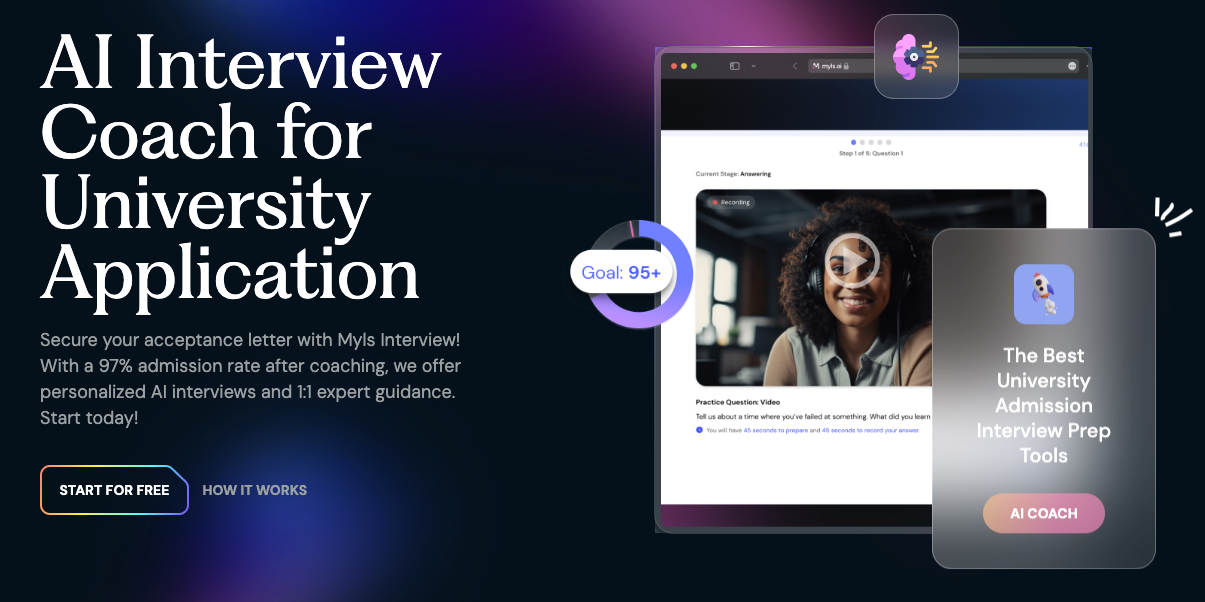
Myls Interview is built specifically to help applicants succeed in Canadian university interviews, including video interviews simulation and supplementary application interviews.
Myls Interview mentors helps students:
- Identify real weaknesses that are safe and effective to discuss
- Reframe challenges into clear growth narratives
- Practice answers under realistic timing conditions on Myls mock interview platform
- Improve clarity, tone, and confidence through repeated simulation
- Receive structured and actionable feedback from mock interview platform
Applicants can practice weakness questions in true to format interview simulations on Myls Interview platform, ensuring comfort with one take responses and time constraints. AI feedback further supports improvement by highlighting pacing issues, filler words, and clarity gaps that applicants often miss on their own.
Through 1 on 1 mentor coaching, students receive guidance from mentors who understand how Canadian admissions teams evaluate reflection, maturity, and growth. Mentors help refine language, select the strongest examples, and avoid common pitfalls.
Why This Matters for Competitive Canadian Programs
Top undergraduate programs receive thousands of academically qualified applications. Interviews often determine final outcomes.
Applicants who demonstrate self awareness, accountability, and growth mindset consistently outperform those who try to appear flawless.
Myls Interview helps applicants present weaknesses not as liabilities, but as evidence of readiness for university level challenges.
Final Perspective
Everyone has weaknesses. What matters in Canadian university interviews is how you understand them and what you do about them.
When approached strategically, the weakness question becomes a powerful way to show maturity, reflection, and potential.
With the right preparation, guidance, and practice, your weakness can become one of the strongest parts of your interview.
Sign up for free with Myls Interview to practice real interview questions and book a session to receive expert feedback, and learn how to turn challenging prompts into opportunities to stand out.


