
How to Talk About Leadership in University Applications Without a Big Title
Leadership matters in Canadian university applications, but it is not about titles. Learn how admissions teams evaluate leadership, how to frame real experiences, and how Myls Interview helps applicants communicate leadership clearly in essays and video interviews.
Why Leadership Matters in University Applications
Across competitive Canadian university admissions, leadership is one of the most consistently evaluated qualities. Whether applicants are targeting U of T Rotman Commerce, UBC Sauder School of Business, McMaster Health Sciences, or Waterloo Engineering, admissions committees repeatedly emphasize leadership as a strong predictor of long term academic and professional success.
However, leadership in university applications is often misunderstood. Many applicants assume leadership means holding the biggest title or leading the largest organization. In reality, admissions teams define leadership far more broadly and practically. Leadership is demonstrated through initiative, responsibility, problem solving, positive influence, and follow through.
Students who have supported classmates, organized small projects, stepped up during group challenges, or contributed meaningfully to their communities have already demonstrated leadership, even if they never held a formal title. The real challenge is not gaining leadership experience, but learning how to recognize it and communicate it clearly in essays, video interviews, and supplementary applications.
Many strong applicants are rejected not because they lack leadership, but because they fail to frame their leadership effectively.
What Canadian Universities Are Really Evaluating When They Ask About Leadership
Leadership matters because it predicts how students will function once admitted. Canadian universities emphasize collaborative learning, group projects, labs, case discussions, and community engagement. Admissions committees are not selecting future executives. They are selecting students who will contribute positively to the academic environment.
When evaluating leadership, admissions teams are asking:
- Can this applicant take initiative without being told
- Can they handle responsibility and setbacks
- Can they reflect on their role within a group
- Can they motivate others or bring a project to completion
- Can they grow from experience rather than simply complete tasks
Leadership signals maturity, accountability, and readiness for demanding academic settings. This is why leadership questions appear across personal statements, supplementary essays, and video interview platforms such as Kira Talent.
Leadership does not require a formal position. Admissions committees consistently reward applicants who show ownership, judgment, and reflection rather than status.
Where Leadership Actually Shows Up in Student Experiences
Most applicants already have leadership stories. They simply underestimate them.
In school projects, leadership often appears when a student organizes tasks, resolves conflict, or keeps a team focused when others struggle. Creating structure or mediating disagreement demonstrates leadership even without a title.
In volunteering, leadership may involve training new volunteers, coordinating logistics, communicating with stakeholders, or sustaining an initiative over time. These responsibilities show trust and accountability.
In personal or family life, leadership can appear through caregiving, supporting peers, managing responsibilities at home, or initiating meaningful personal projects. These experiences demonstrate reliability and emotional maturity.
In hobbies and passion projects, leadership can involve starting an online community, organizing events, teaching yourself a skill and sharing it, or maintaining long term commitment without external pressure.
Admissions committees care less about where leadership occurred and more about how applicants acted, what they learned, and how they reflect on the experience.
How to Communicate Leadership Without Overselling
Admissions teams value honesty, self awareness, and clarity over self promotion. Strong leadership communication focuses on actions and impact, not labels.
Saying “I am a leader” is far less effective than explaining what you did and why it mattered.
For example, describing how you created a simple system to help a struggling group meet deadlines demonstrates initiative, problem solving, and responsibility far more effectively than generic claims.
Using specific examples is critical. One well explained experience that shows decision making, team dynamics, and outcomes is stronger than a long list of roles.
Reflection is essential. Admissions officers want to see growth, not perfection. Applicants who explain what did not work initially and how they adapted demonstrate learning potential and maturity.
Strong leadership responses also connect past experiences to future academic or career goals, signalling intentionality and program fit.
Common Leadership Mistakes That Weaken Applications
Many applicants undermine their applications through avoidable errors.
Overusing buzzwords such as “natural leader” or “born to lead” adds little meaning.
Listing titles without explaining actions forces admissions committees to guess at impact.
Trying to impress rather than connect often results in over rehearsed or inauthentic responses.
Failing to reflect on learning or growth misses a key evaluation criterion.
These mistakes are rarely caused by lack of effort and are more often the result of misaligned preparation. They are usually due to lack of guidance on how leadership is evaluated.
How Myls Interview Helps Applicants Identify and Express Leadership
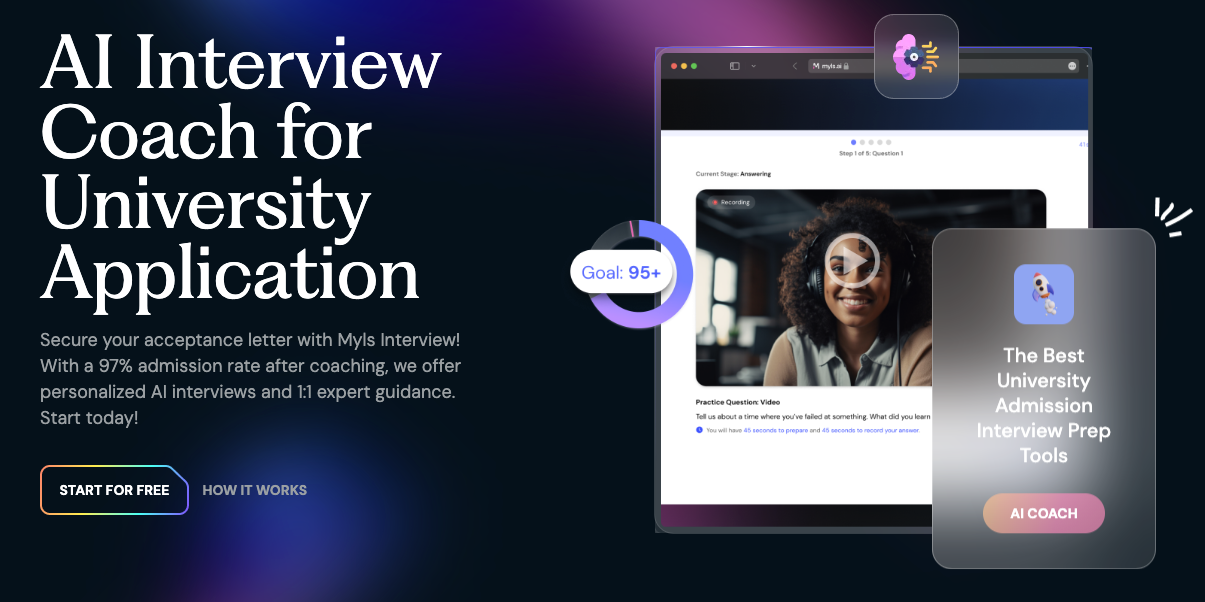
Myls Interview is designed to help students discover, refine, and communicate leadership experiences in ways that align with Canadian university admissions criteria.
Many applicants underestimate their leadership because they compare themselves to peers with formal titles. Myls Interview helps applicants recognize leadership in everyday actions and translate those experiences into clear, compelling narratives.
Through 1-on-1 personalized mentoring, applicants are guided to reflect on real experiences, identify moments of initiative, responsibility, and impact, and connect those moments to academic and career goals. Mentors ask targeted questions that help applicants uncover leadership they may have overlooked.
For applicants preparing for video interviews, Myls Interview provides realistic practice environments that mirror the timing and pressure of actual admissions interviews. Applicants practice answering leadership questions out loud, under time constraints, building fluency and confidence.
Common leadership prompts practiced include explaining:
- A time you led a group
- A situation involving conflict or disagreement
- How you motivated others
- How you handled responsibility or setbacks
Practicing these responses in structured simulations helps applicants avoid rambling and deliver focused, well organized answers.
Myls Interview also provides targeted feedback that sharpens leadership communication. AI tools and mentor reviews help applicants:
- Replace vague language with specific actions
- Improve clarity and structure
- Balance confidence with humility
- Strengthen on camera presence
Leadership stories are aligned across the entire application, including resumes, essays, and video responses. This consistency strengthens the overall narrative and reinforces core strengths.
Because leadership is often evaluated in one take video formats, Myls Interview emphasizes performance based interview preparation rather than memorization. Applicants learn how to think clearly, structure responses, and communicate confidently under pressure.
Why This Matters for Competitive Canadian Programs
Programs such as U of T Rotman Commerce, UBC Sauder, McMaster Health Sciences, and Waterloo Engineering receive thousands of applications from academically qualified students. Leadership and communication often determine final outcomes.
Applicants who clearly articulate how they contribute to teams, take responsibility, and learn from experience gain a measurable advantage. Those who rely on generic statements or titles often fail to stand out.
Myls Interview helps applicants move from uncertainty to clarity by providing structure, feedback, and realistic practice aligned with Canadian admissions expectations.
Final Perspective
Leadership is not about titles. It is about how you step up, solve problems, and influence outcomes.
Most applicants already have leadership experiences worth sharing. The difference between a strong application and a weak one lies in how those experiences are framed and communicated.
With the right guidance, even small experiences can become powerful evidence of leadership. Myls Interview helps applicants recognize their impact, communicate it clearly, and present themselves as thoughtful, capable contributors to university communities.
Applicants who prepare strategically do not just talk about leadership. They demonstrate it.
Sign up for free with Myls Interview to connect with mentors, practice leadership questions, and build an application that reflects the leader you already are.


