
How International Students Can Get Into Top Canadian Business and Engineering Programs
International students applying to top Canadian business and engineering programs face unique challenges and advantages. Learn how to approach supplementary applications, video interviews, and program specific evaluations with the right strategy.

Why Supplementary Applications Matter More for International Students
For international students applying to Canadian universities, academic excellence is necessary but rarely sufficient. High grades establish baseline eligibility, but they do not meaningfully differentiate applicants in competitive pools dominated by near perfect transcripts.
This is where the Canadian university supplementary application becomes decisive.
Unlike many domestic applicants, international students often come from education systems where extracurricular involvement is informal, leadership is situational rather than title driven, and personal reflection is not explicitly taught or assessed. Canadian admissions committees are aware of these differences.
As a result, supplementary applications for international students in Canada function as a contextual evaluation tool. They allow universities to understand who you are beyond grades and how your background prepares you for Canadian academic and professional environments.
For applicants targeting programs such as Ivey Business School at Western University, York University Schulich School of Business, University of Waterloo Engineering, Queen’s Smith School of Business, or University of Toronto Engineering, the supplementary application often carries equal or greater weight than academic metrics.
For international applicants, this is not a disadvantage. It is an opportunity.
Understanding the Unique Challenges and Advantages of International Applicants
International students are not evaluated against a Canadian resume template. They are evaluated on potential judgment adaptability and readiness, interpreted through the lens of context.
Common Structural Challenges for International Applicants
International applicants frequently face:
- Limited access to formal school based clubs or leadership titles
- Less exposure to Canadian style video interviews
- Language processing challenges under timed interview conditions
- Uncertainty about how family or community responsibilities are assessed
These challenges often lead students to undervalue their experiences or imitate North American examples that feel inauthentic.
Under-recognized Strengths of International Students
At the same time, international applicants bring strengths that Canadian university admissions committees actively value:
- Multilingual communication and cross cultural fluency
- Experience navigating ambiguity across systems
- Leadership in informal real world settings
- Early responsibility through family business or community roles
When framed effectively, these qualities often signal greater maturity and resilience than conventional school based leadership.
The objective is not to replicate a Canadian profile. The objective is to translate international experience into admissions relevant evidence.
Program Specific Strategies for Canadian Business and Engineering Admissions
Ivey AEO at Western University
What Ivey evaluates
Western Ivey emphasizes initiative over position, impact over hours, and reflection over description. Admissions officers assess how you think about leadership, not how prestigious a role sounds.
What international students should highlight
- NGO or volunteer initiatives
- Independent tutoring or education projects
- Family business operations such as logistics finance or staffing
- Self initiated projects responding to unmet needs
How to present it
Use the Ivey Activity Template exactly as instructed. Quantify outcomes where possible. Include reflection on learning and decision making. Strong responses demonstrate ownership rather than participation.
Waterloo Engineering and Computer Science
What Waterloo evaluates
Waterloo Engineering prioritizes intellectual curiosity, technical engagement beyond coursework, and evidence of collaboration and persistence. Formal awards are helpful but not required.
What international students should highlight
- Coding projects and self study
- Online coursework and competitions
- Robotics hardware builds or peer problem solving
- Mentoring or collaborative learning experiences
How to present it
Use structured narratives. Emphasize problem definition iteration and learning from setbacks. Waterloo values approach to complexity more than polished outcomes.
Schulich BBA at York University
What Schulich evaluates
York Schulich looks for business awareness leadership potential global perspective and communication clarity. Language perfection matters less than reasoning clarity.
What international students should highlight
- Internships or shadowing experiences
- Startup exposure or entrepreneurship
- Family business involvement
- Community fundraising or organizational roles
Video interview guidance
Speak deliberately not quickly. Structure responses clearly. Avoid over polishing. Schulich evaluates how you articulate ideas under realistic business conditions.
University of Toronto Engineering
What U of T evaluates
U of T Engineering emphasizes academic rigor collaboration communication and growth potential in team based environments.
What international students should highlight
- Research or academic projects
- Science fairs or design challenges
- Lab exposure or internships
- Peer tutoring or collaborative leadership
Practical strategy
Prepare concise explanations of technical work for non specialists. Communication quality matters as much as technical depth.
Queen’s Commerce at Smith School of Business
What Queen’s Smith evaluates
Queen’s Smith places strong emphasis on ethical reasoning self awareness and composure under pressure.
What international students should highlight
- Personal growth experiences
- Mentorship or caregiving responsibilities
- Meaningful work outside formal school settings
Queen’s Smith is less concerned with what you did and more concerned with why it mattered and how it changed you.
Crafting Responses That Work Across Cultures
The STAR framework remains the most reliable structure for international applicants to Canadian universities:
- Situation provides brief factual context
- Task clarifies responsibility
- Action focuses on decisions you personally made
- Result explains impact and learning
Common Mistakes to Avoid
- Mimicking North American leadership titles
- Apologizing for non traditional experiences
- Sounding memorized or scripted
- Minimizing family or community responsibilities
Canadian admissions committees are trained to recognize authentic responsibility even without formal labels.
How Myls Interview Helps International Students Succeed
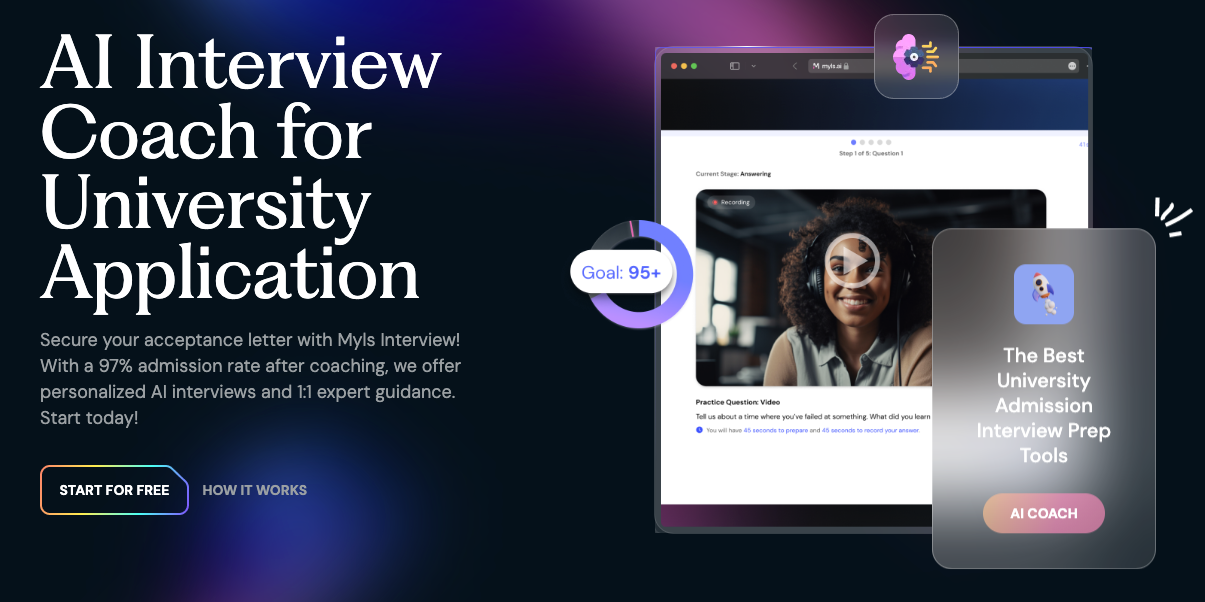
Myls Interview bridges the gap between strong experience and effective communication, especially for international students unfamiliar with Canadian universities admissions systems.
Rather than teaching students to sound Canadian, Myls Interview helps them communicate clearly confidently and authentically within Canadian evaluation frameworks.
Myls Interview supports international applicants through:
- Program specific interview simulations for Canadian universities
- International aware coaching that respects cultural context
- Admissions aligned AI feedback focused on reasoning clarity
- Measurable improvement tracking across practice sessions
Applicants learn how to explain leadership judgment and growth in a way Canadian admissions committees recognize and reward.
Final Thoughts
You do not need a Canadian resume. You need a coherent admissions narrative.
Canadian universities are selecting for judgment adaptability and readiness, not conformity. Your leadership may have occurred at home, in your community, outside formal institutions, or without recognition.
Those experiences are valid. When structured correctly, they are often more compelling than conventional resumes.
Myls Interview exists to ensure international students are evaluated on the strength of their thinking, not their familiarity with the system.
Start practicing with Myls Interview and turn your international experience into a Canadian admissions advantage.


